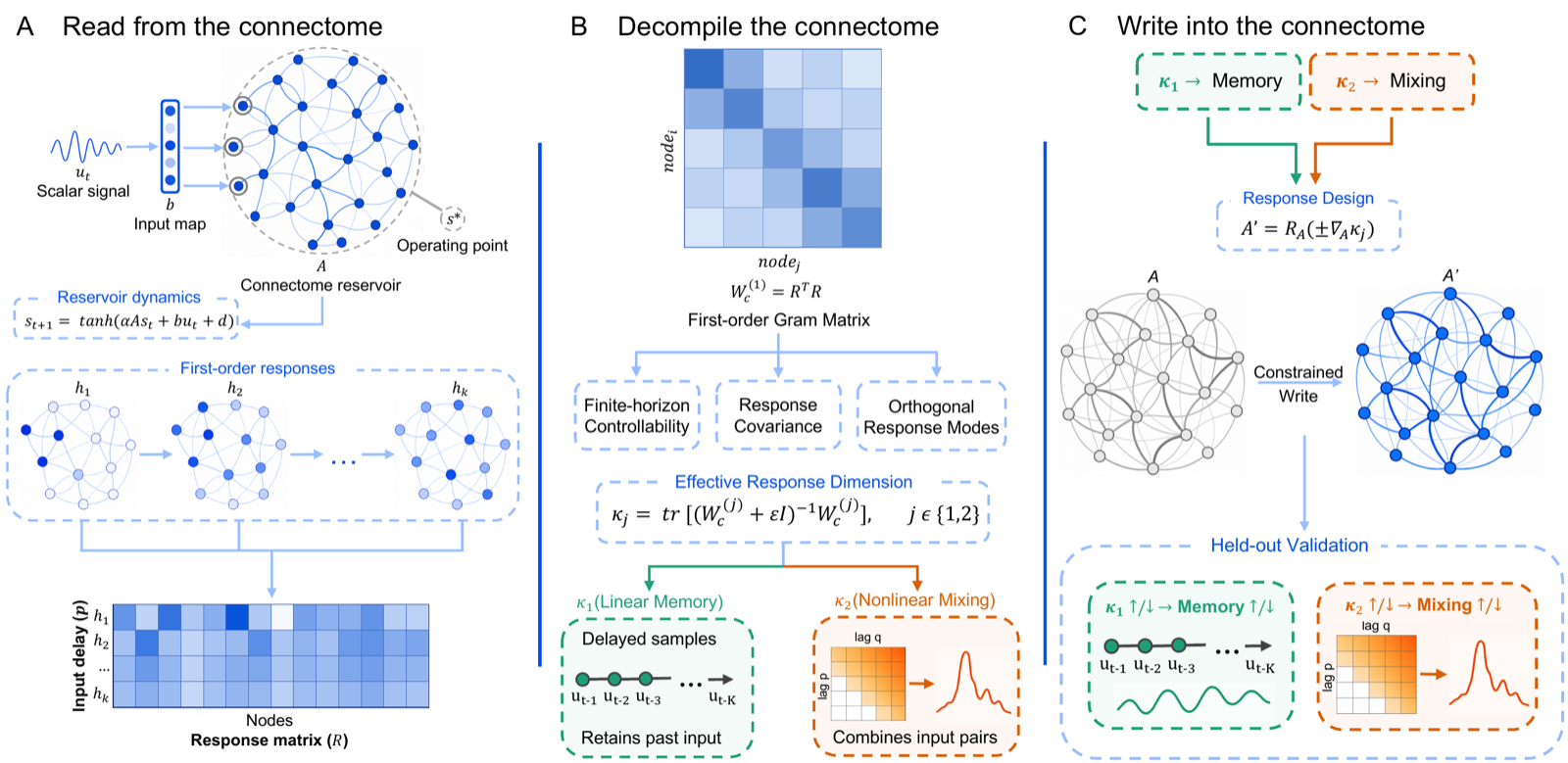
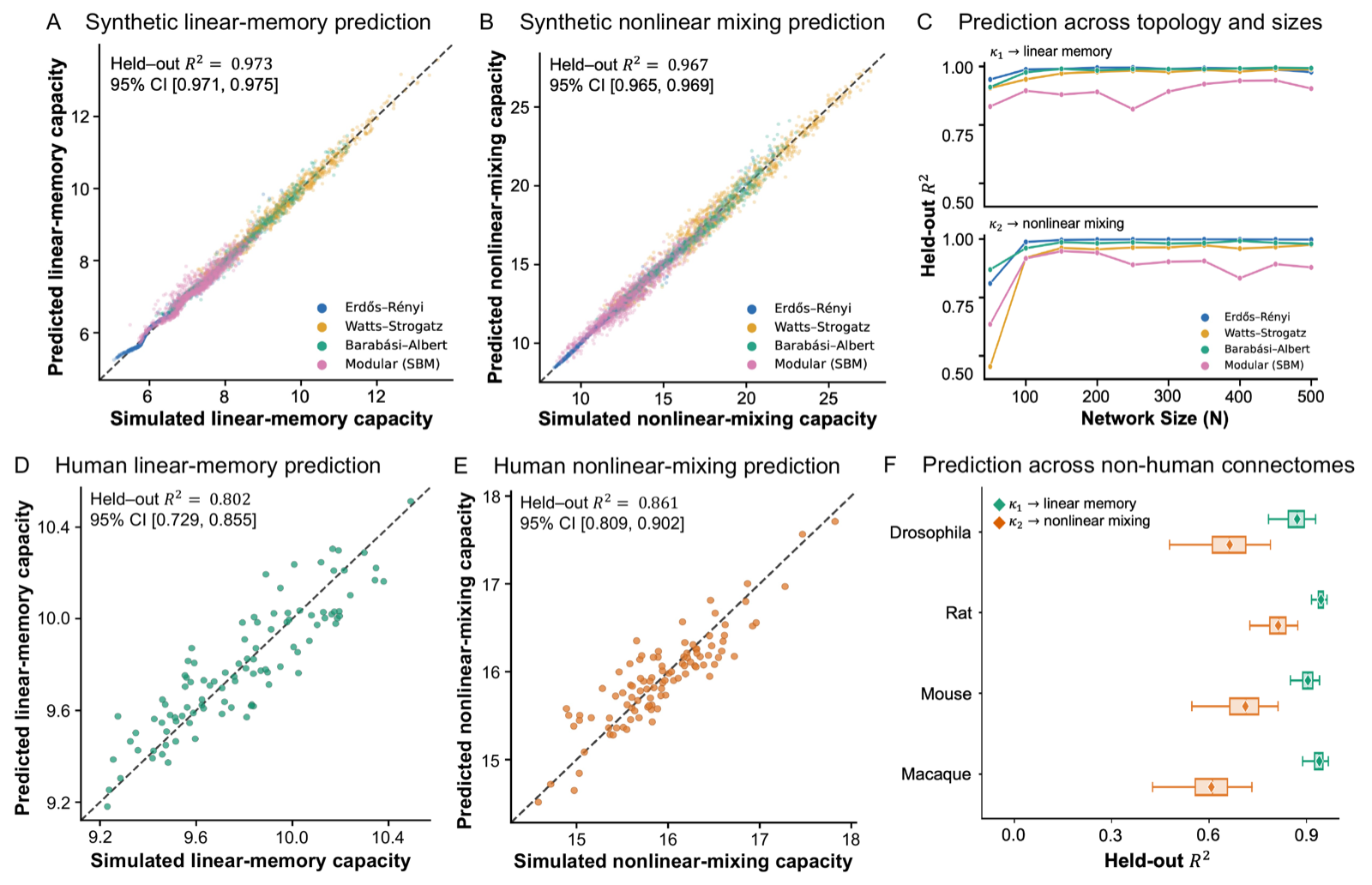
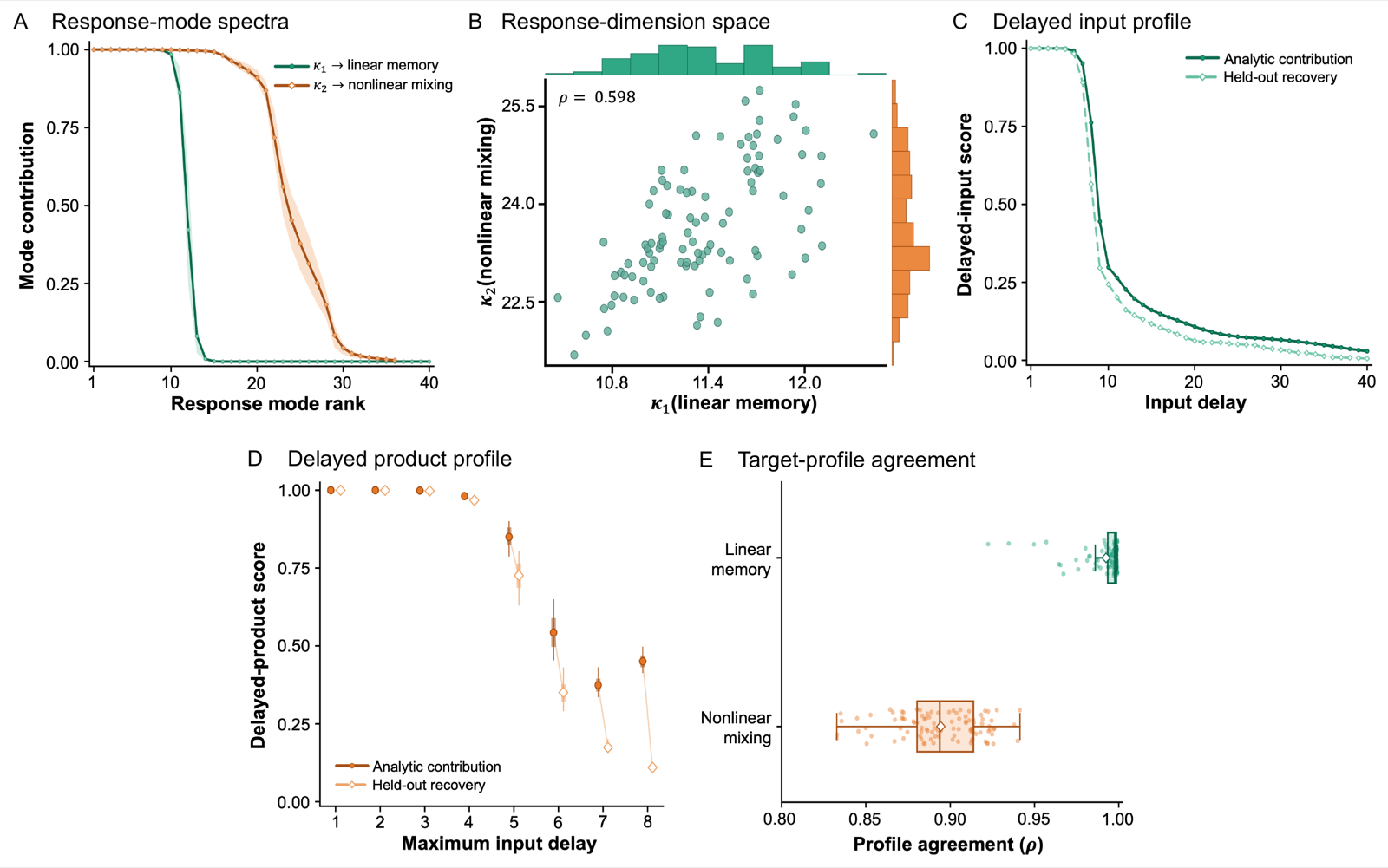
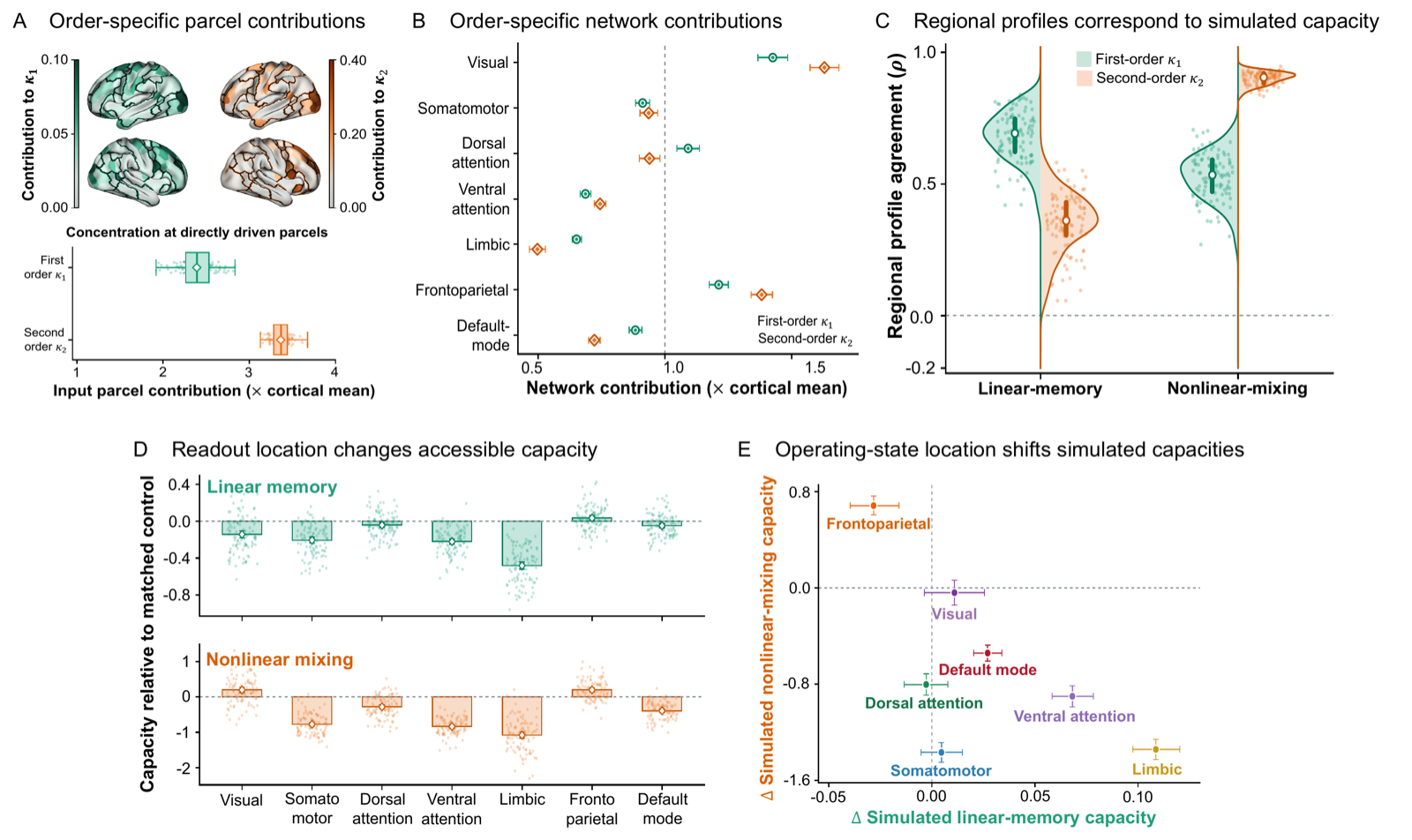
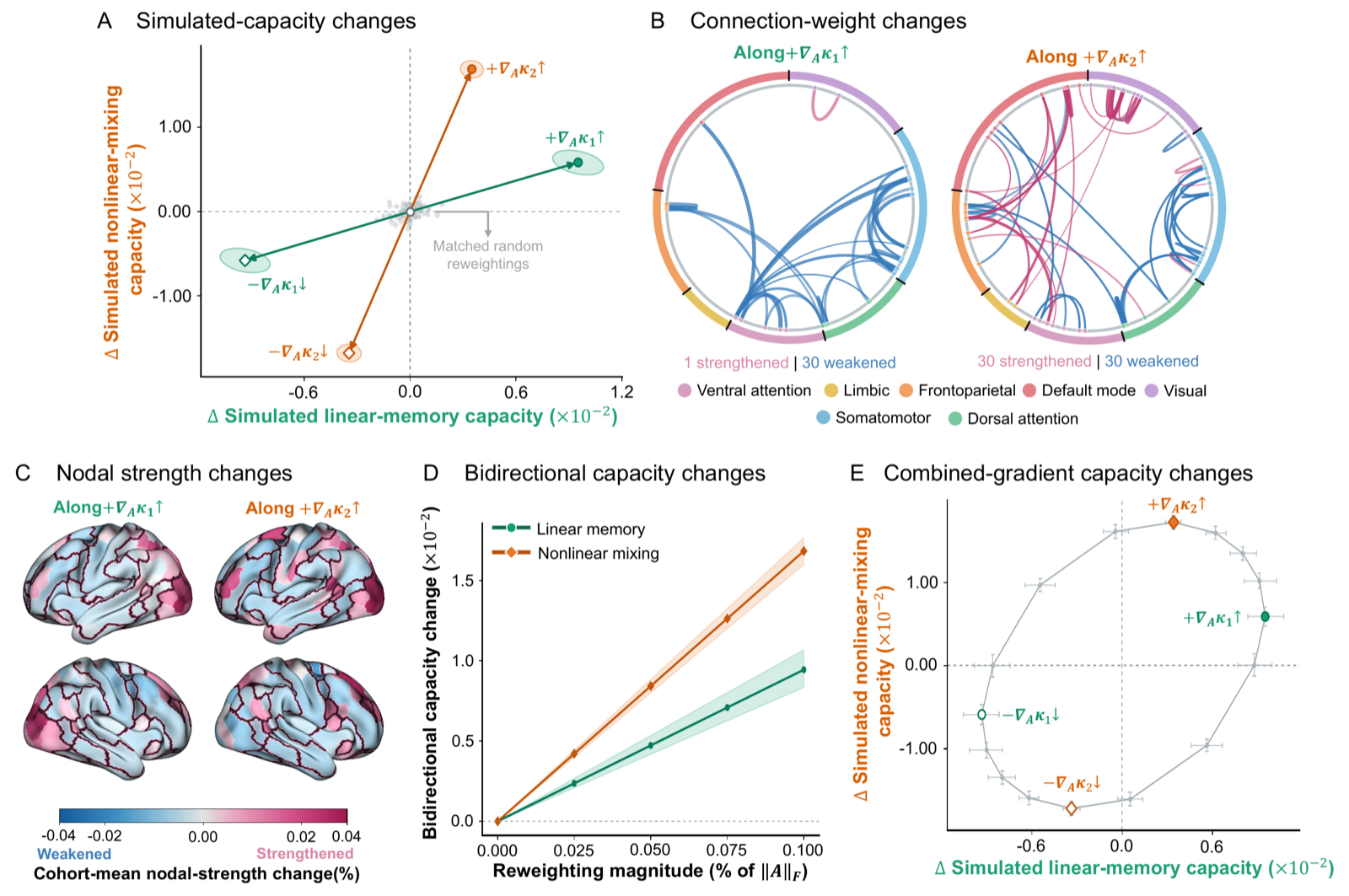
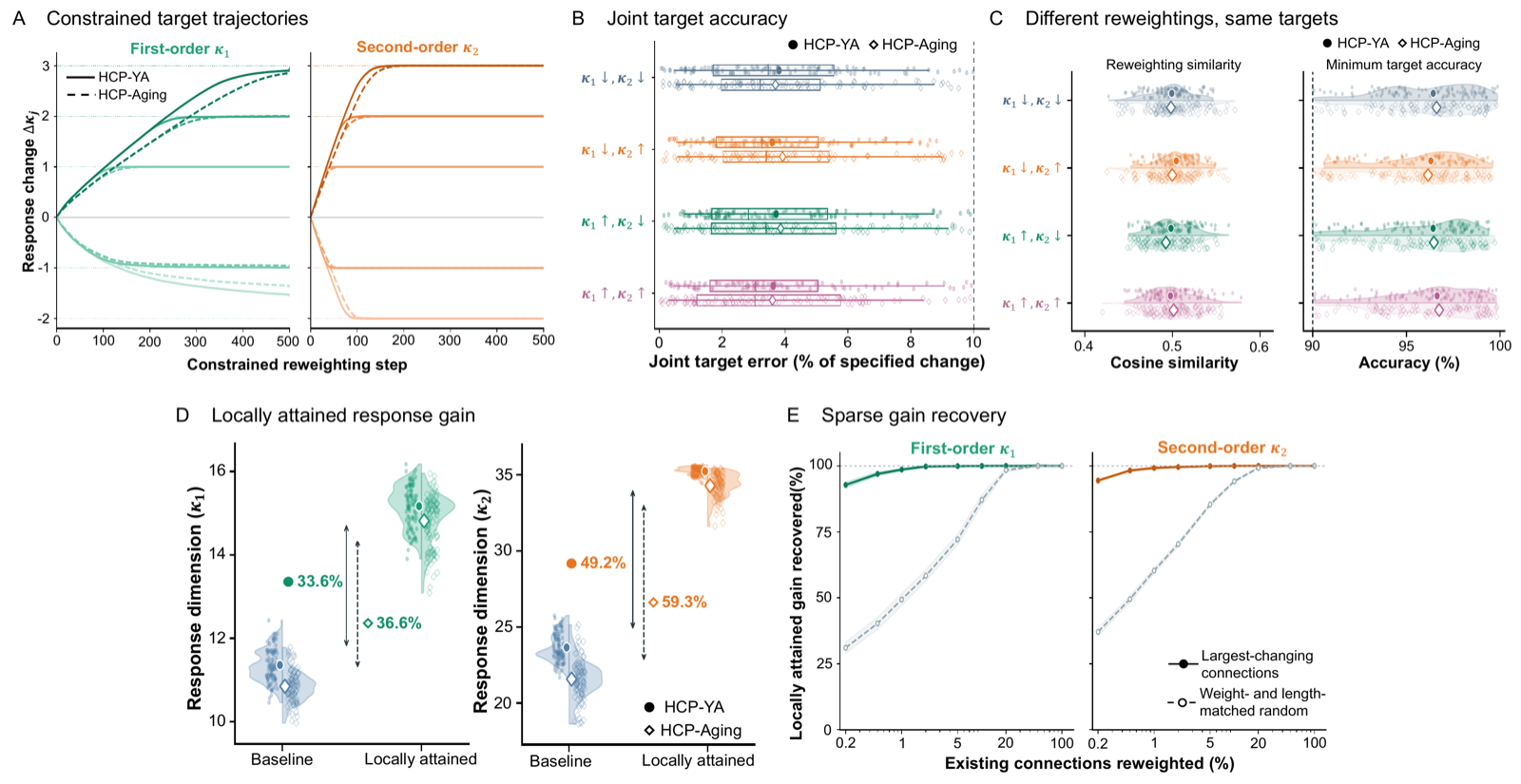
Neural systems use information from earlier inputs to shape their current responses. How recurrent connectivity supports the retention and combination of this information remains difficult to quantify. Here, we introduce Connectome Response Analysis and Design (CoRAD), an analytic framework that derives order-specific responses from a connectome and decompiles them into dimensions computationally associated with linear memory and nonlinear mixing. Each dimension is an effective count of the response directions generated at its corresponding order, providing a compact summary of how past inputs shape network activity. CoRAD uses their gradients to guide constrained changes to existing connections. Across a range of networks—from synthetic reservoirs, to human and non-human connectomes—the response dimensions predicted their corresponding simulated memory capacities in held-out data. Their decompositions showed how response contributions were distributed across input histories and cortical regions. Gradient-guided reweighting changed the corresponding held-out capacities and moved one or both dimensions toward specified targets under wiring constraints. Most of the gain found by the constrained searches was recovered using only a small fraction of existing connections, while different reweightings reached similar joint targets. Together, CoRAD provides a quantitative link between recurrent connectivity and the explanation, interpretation, and constrained design of predicted temporal-processing capacities.